Uncle Franc shares stories of Fingal, food and culture
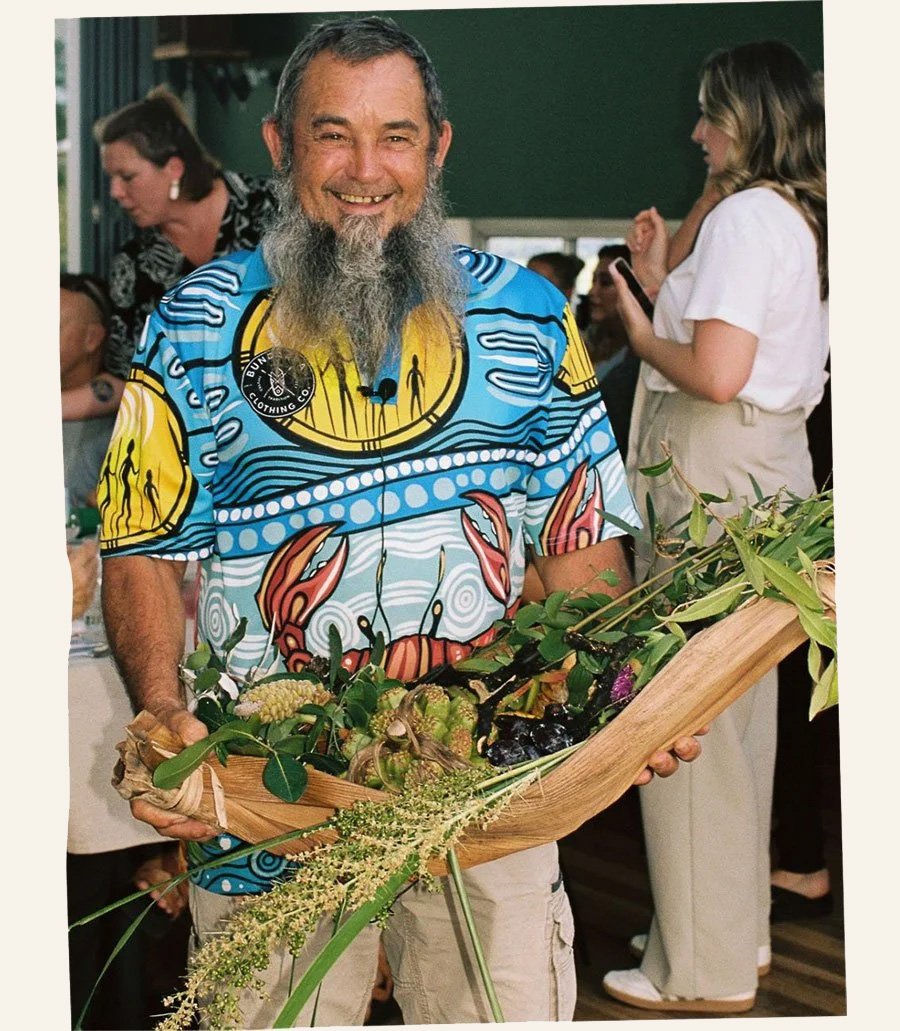
Uncle Franc Krasna.
Uncle Franc Krasna is a respected elder and cultural educator of the Goodjinburra clan of Bundjalung Nation.
We chatted to Uncle Franc ahead of his Walking Together event for Savour The Tweed to find out what makes the area of Fingal so special ...
We are living in a unique area of Australia. Wollumbin / Mt Warning gets the first sunlight on the mainland of Australia each day. The Pacific Ocean currents come in closer to here than any other part of the East Coast of Australia.
We live in the third highest biodiverse region of Australia with an abundance of cultural bush foods and resources, saltwater foods and land animals. Our people have always been connected to that.
Most of our mob on the Tweed have a connection to Fingal, it is a very special place – a 7 km vegetated sand peninsula, open to the river and ocean with a basalt headland in the middle so we call ourselves saltwater people.
The cultural name for Fingal is Booning which means ‘place of the echidna’. The dreamtime echidna is embodied in the columnar basalt rock formation off the northern end of the headland. We also have many echidnas that live in the bush.
A permanent settlement started at Fingal as a fringe camp back in the late 1800s and Fingal was commonly referred to as the Blacks Camp way up to the 1970s. It was also known as a place of Resources and Traditional burials.
After the arrival of Europeans, our people got involved in the fishing industry, oysters and share farming crops like bananas and small crop vegetables and sugarcane cutting. Most of the Tweed mob grew up eating fresh vegetables and cultural foods through our connection to country. We also ate lots of fresh fish, pipis, oysters and mud crabs.
l grew up eating a variety of different foods as my father was from Europe. My school lunches use to be interesting as sometimes l use to have curried pipi sandwiches for lunch. Lots of other kids would want to swap their lunches for mine which shows the cultural influences back when I was at school.
Traditionally, before Europeans, most of the day was spent grazing and collecting food for the one main meal of the day where everyone would gather around the fire at the end of the day.
Back in my grandmother’s day, families would have boats on the beach and would row out to Cook Island and catch lots of fish, more than they needed to feed everyone. At the end of the day most of the catch would be taken into Coolangatta and put on the train to be sold at the Brisbane Fish Markets.
Years ago, we used to have about 5 Aboriginal/Islander commercial fishing crews based in the Tweed, now I am the only Aboriginal commercial fishermen left in the region. What we do have now is the Tweed Aboriginal Cultural Fishing Plan in place, one of only 2 in NSW at this point in time.
I grew up doing farm work until I was 32, small crops, flowers – and owned a vineyard in Robinvale, Victoria. My parents had a small crop farm where part of Tweed Heights housing estate is now located. When I was 15 years old l got a primary producers drivers’ licence to take produce to Murwillumbah train station to send to the markets in Sydney and Melbourne, and to pick up supplies for the farm.
After shifting back from Victoria to Fingal in 1986 I became the Bridge Master for the old Barneys Point Bridge, operating the lift span for large boats going up and down the river until the new Barneys Point Bridge was opened in 1996.
My wife and I had 2 young girls of school age when we shifted back which created my interest in education and sharing Cultural Knowledge. Now I mainly do tour guiding, Cultural Immersion Sessions and School excursions on Country at Fingal.
Most people refer to plants as bush tucker plants, I call them Resource Plants because they provide food, medicine, materials to make things, ceremonial purposes and as indicator plants in our 6 seasons calendar.
You can eat the flowers of the cottonwood tree, the sap from the bark is used as an antiseptic, and the bark is used to make string nets for the mullet season and trapping animals. Calendar plants tell us about the seasons, so when the coastal banksias flower in March the sea mullet season is starting. When the paperbark flowers, mud crabs should be fat and when the wattle flowers, big whiting move into our estuaries.
We grew up learning these things and the knowledge that we carry with us is learnt from our Elders going out on Country. Our knowledge is embodied in our creation stories, dance stories and art stories.
Fingal is a special place. I’m doing this walk for Savour The Tweed, to share local traditional knowledge, stories, history and what it means to be connected to Country. It’s important because the more we learn about each other and about others culture, we develop greater understanding of each other.
Walking Together
Thursday 22 October
9:30 – 11 am
Miimi’s Café, Fingal Head
In respectful acknowledgment of the Bundjalung Traditional Custodians and their ongoing connection to Country, Savour The Tweed honours the land, its history, and the people who continue to grow from it.